Daya Sathakam
Showing posts with label Desikan. Show all posts
Showing posts with label Desikan. Show all posts
Friday, October 2, 2020

Monday, May 4, 2020
Daya Sathakam Slokas 91-100 Vasantha Tilakaa Chandah
Daya Sathakam Slokas 91-100 Vasantha Tilakaa Chandah

Daya Sathakam Slokas 41-50 Mandhaa Kranthaa Chandah
Daya Sathakam Slokas 41-50 Mandhaa Kranthaa Chandah

Daya Sathakam Slokas 21-30 Aryaa Oupacchandhasikham
Daya Sathakam Slokas 21-30 Oupacchandhasikham Chandah

Saturday, May 2, 2020
Daya Sathakam
Daya Sathakam
Daya Sathakam was Composed by Sri Vedantha Desikan, who is considered as a gift from Lord Venkateshwara to his parents.
Daya Sathakam is treatise and stothram on Lord Venkateshwara of Thitumalai Thiruppathi. His Mercy (Dhayaa is celebrated by Desikan in a variety of ways by Sri Vedantha Desikan. Prapatti to the Lord of seven Hills is realized with the Daya (compassion) of Lord Venkatesa.
There is a total of 108 slokas divided in to ten segments composed in different Chandahs (vedic Meters).
The Metres (Chandas) include Anushtup, Aryaa, Oupacchandhasikam, Maalini, Nathkutakam, Sikarini, Harini, Pruthvee, Vasantha Tilakaa, Maalini, and Sardhoola Vikriditham
Sri Vedantha Desikan elaborates the following in these 108 slokas.
1) Lord Venkatesa is full of compassion and worthy of worship
2) Lord Venkatesa is personified as the Daya Devi acting as a Karpaka vriksha for devotees.
3) The idol of Lord Venkatesa is the divine nectar and feast to the eyes,
4) The idol of Lord Venkatesa is the most holy on this Thirumalai Hills
5) Mere glance (kataksham) from the Lord removes debts to Devas, Rishis and Pitrus
6) Surrender at the Lotus feet of the Thiruvengamudaiyan is the easy means to reach him
7) All obstacles of devotees vanish with the compassion of the Lord Venkatesa
8)Lord Venkatesa transforms devotees by initially granting them what they ask for but leads them to use their discrimination to reduce desires on worldly perishable objects and seek liberation.
9) Establish Sakyam (Friendship) with the Lord who does expect any favors from the devotee
10) Lord Venkatesa's grace would lead devotees to path of liberation
There ate 11 links to videos listen to 108 slokas of Daya Sathakam
There is a total of 108 slokas divided in to ten segments composed in different Chandahs (vedic Meters).


Thursday, April 30, 2020
Sri Stuthi Composed by Sri Vedantha Desikar
Sri Stuthi Composed by Sri Vedantha Desikar
This is Vedanta Desika’s Kanaka-dhaara-stavam. Lakshmi or Sri is reputedly the Goddess of Wealth. Sloka 16 refers to how She can shower wealth on Her votaries. This stothra is addressed to Padmavathi Thayar and Lord Srinivasa of Seven Hillls.


Wednesday, April 29, 2020
Abhhethi Stavam composed Sri Vedantha Desikan
Abhhethi Stava By Sri Vedantha Desikan
Abeethi Stava composed by Sri Vedantha Desikan is a prayer addressed to Lord Ranganatha of Srirangam, to get His blessings to remove fears arising from forces and diseases over which humanity has no control. This composition was composed after invasion on Srirangam by Muslim rulers.
The composer calls for total surrender with utmost faith. He describes the auspious qualities of Lord Ranganatha and prays for relief from all types of fear from any source.
To emphasize the importance of Sharanagathi l, there is a reference to carama slokas of Varaaha, Rama, Gita and Seetha. Sri Vedantha Desika cites the examples of devotees ( Prahalada, Kaakaasura, Gajendra, Draupadi, Vibhishiana and Ambarisha ) who surrendered at the lotus feet of the Lord and got relief from their respective fears.
Let us surrender and Pray at the Lotus feet of Lord Ranganatha with Abeethi Stava stothram and seek his blessings for the entire world relief from Coronavirus


Tuesday, October 8, 2019
Kamaasika Ashtakam composed by Thupul Sri Vedantha Desikan
Kamaasika Ashtakam
Thupul sri Vedantha Desikan composed this stotram on Kama Aasikaa Narasimhan of Thiruvelukkai Divya Desam. It is sai that Lord Sriman Narayana came out His abode in Paramapatham out of his own desire tok archavatar as Kama Aasika Narasimhan on the banks of Vegavathi river


Thursday, January 11, 2018
Sri Bhagavad Dhyana Sopanam composed by Thoopul Vedantha Desikan
Sri Bhagavad Dhyana Sopanam
Composed by Sri. Thoopul Vedantha Desikan
Thiruppanazhwar had composed and sung 10 paurams of Amanalathipiran describing Lord Sri Ranganatha's beauty from Thiruvadi to head. Lord Ranganatha was so immensely pleased gave him moksham rightaway. Thiruppanazhwar describes Lord Ranaganatha as follows.
- அரங்கத்தம்மான் திருக்கமல பாதம் வந்தென் கண்ணினுள்ளன வொக்கின்றதே.
- அரங்கத்தம்மான் அரை சிவந்த ஆடையின் மேல் சென்றதாம் என் சிந்தனையே
- அரங்கத் தரவினணையான் அந்தி போல் நிறத்தாடையும் அதன் மேல் அயனைப் படைத்ததோரெழில் உந்தி மேலதன்றோ
- அரங்கத்து அம்மான் திரு வயிறு உதரபந்தம்
- அரங்கத்தம்மான் திருவார மார்பதன்றோ
- அண்டம் பகிரண்டம் ஒரு மா நிலம் எழு மால் வரை முற்றும் உண்ட கண்டம்
- கையின் ஆர் சுரி சங்கு அனல் ஆழியர் நீள் வரை போல் மெய்யனார்
- துளபம் விரை ஆர் கமழ் நீள்முடி எம் ஐயனார் அணி அரங்கனார் அரவு இன் அணை மிசை மேய மாயனார் செய்ய வாய்
- அரங்கத்து அமலன் முகத்து கரிய ஆகி புடை பரந்து மிளிர்ந்து செவ்வரி ஓடி நீண்ட பெரிய ஆய அக் கண்கள்
- அரங்கத்து அரவு இன் அணையான் கோலம் மா மணி ஆரமும் முத்து தாமமும் முடிவு இல்லது ஓர் எழில் நீலம் மேனி
Sri Vedantha Desikan composed a Sanskrit Stothram "Bhagavad Dhyana Sopanam" on similar lines describing
- Radiance or effulgence emerging from overall appearance
- Lotus feet
- Ankles and up to knees
- Thighs and silk garment
- Naval and the emerging lotus holding created Brahma
- Chest- vakshasthalam
- The Divine hands
- Beautiful Face - Thirumugha MandalamHead
- The Crown adorning the head
- Enjoying Lotus feet to Head Padahadhi Kesam
- Beauty of NamPerumal
An excellent review and Vykyanam of this Stotram bu Oppiliappan Koil Sri Vadhachari Satakopan Swami may be found at https://www.sadagopan.org/index.php/component/djcatalog2/?format=raw&task=download&fid=223
Adiyen really enjoyed reading this article.
rendering of Thiruppanazhwar's Amalanadhipiran may be found at https://srimannarayana108.blogspot.com/2013/03/amalanathi-piran-by-sri-thiruppanazhwar.html
Adiyen has tried to render Bhagavadhyana Sopanam in a similar tune like Amanadhipiran.


Wednesday, January 3, 2018
Thiruchinnamaalai composed by Sri Thoopul Vedantha Desikan
Thiruchinnamaalai composed by
Sri Thoopul Vedantha DesikanThiruchinnam is an auspicious musical instrument used in Kanchi Varadaraja Perumal kovil deity processions through the streets of Kanchi. The Thiruchinnam announced that Lord has left his sanctum and alerted the devotees to be ready to receive Lord inf front of their homes on the route of the procession. Sri Thoopul Vedantha desikan got attracted to the musical sounds emanating from Thiruchinnam. Later in his life he won a debate and establishes the supremacy of Azhwar's Divyaprabhandham and ensured it was chanted during procession of the deity. Lord Vardaraja pleased with this, ordered one his archakas to present a Thiruchinnam to This Acharya..
Thiruchinnamalai composed by Sri Thoopul Vedantha Desikan comprises of 11 verses. The first six verses bring out the essence of Thirumanthiram, the seventh brings out essesnce of Dhvayam and the 8th and the 9th bring out the essence of Charama slOkam.


Saturday, December 23, 2017
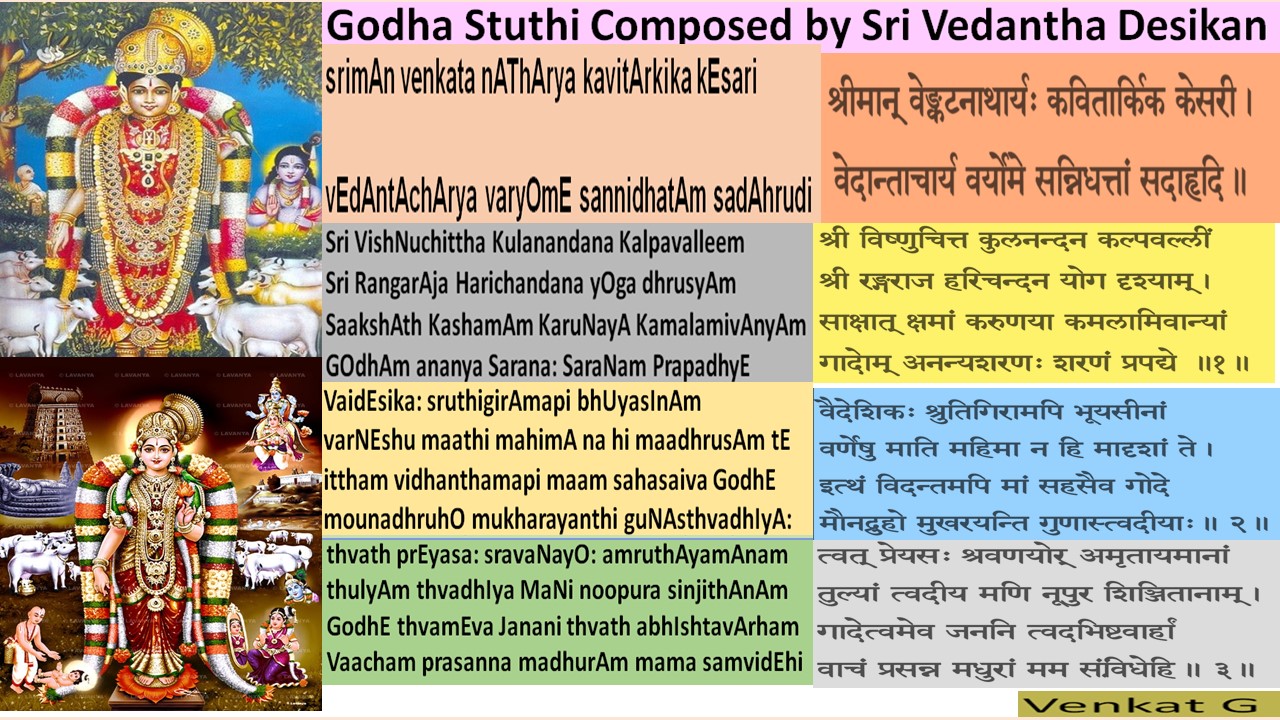
गोदा स्तुथिः SrI Goda sthuthi
गोदा स्तुथिः
SrI Goda sthuthi
Thoopul Sri Vedantha Desikan had the blessings of Lord Hayagriva and was well versed in Sanskrit and Tamil and has composed slokas, Stothrams and Pasurams in both languages. While he was staying in Srivilliputhoor, one day he was planning to visit Andal Sannathi and offer his prayers after a few hours. But to his surprise he heard Mangala Vadhya noises on his street similar to that usually heard when a deity procession from the temple, takes place. When he came out to the entrance of his home. he saw utsavar Andal coming in a procession towards his home. He was surprised because he lived in a street that does not fall in the route for temple deity processions. He was excited because the very deity Andal that he was planning to visit was at his doorstep. Spontaneously came out this 29 stanza sanskrit stothram outpouring of his Bakthi towards Andal. It seemed that Andal could not wait for his arrival to Sannathi and decided to go him to get Managalasasanam.
Here is a presentation of SrI Godasthuthi.


Subscribe to:
Posts (Atom)